Keeping a white and bright smile has always been an important part in our Oral Care routine. For thousands of years different forms of toothpaste have been developed, dating back to the earliest created by the Egyptians using crushed rock salt, pepper, mint and dried iris flowers. It was not until the 1800s where soap was used as one of the ingredients in toothpastes, also chalk and ground charcoal as well. As time continues to grow and develop, so does the toothpaste industry. In 1914, fluoride was added to toothpastes. In 1975, herbal toothpastes were created as an alternative to fluoride toothpastes. NASA also invented edible toothpastes for their astronauts who are in space, which is still used to this day for Children’s toothpaste to help kids who are learning to brush their teeth. Finally in the year 1989, the first whitening toothpaste was developed. Both of these ancient and modern toothpastes were made for the same purpose which is to clean the teeth and gums, whiten teeth and freshen breath.
Traditional Whitening Toothpaste relies on abrasives, bleaching agents or enzymes in its formulations to physically remove surface stains. These would gradually lift stains and improve the color of the teeth. Mild abrasives, such as hydrated silica or calcium carbonate, found in whitening toothpaste works by physically scrubbing the surface stains. It is safe when used properly, however overuse might result in weakened enamel. Chemical Whitening Agents, such as hydrogen peroxide or carbamide peroxide, helps to penetrate the enamel and break down stain molecules. With this evident results can be seen over weeks. Enzymes, such as papain or bromelain, can break down protein-based plaque and it is a much gentler option. However, the downside to traditional whitening toothpaste is potentially causing enamel wear with constant use, making teeth more susceptible to sensitivy.
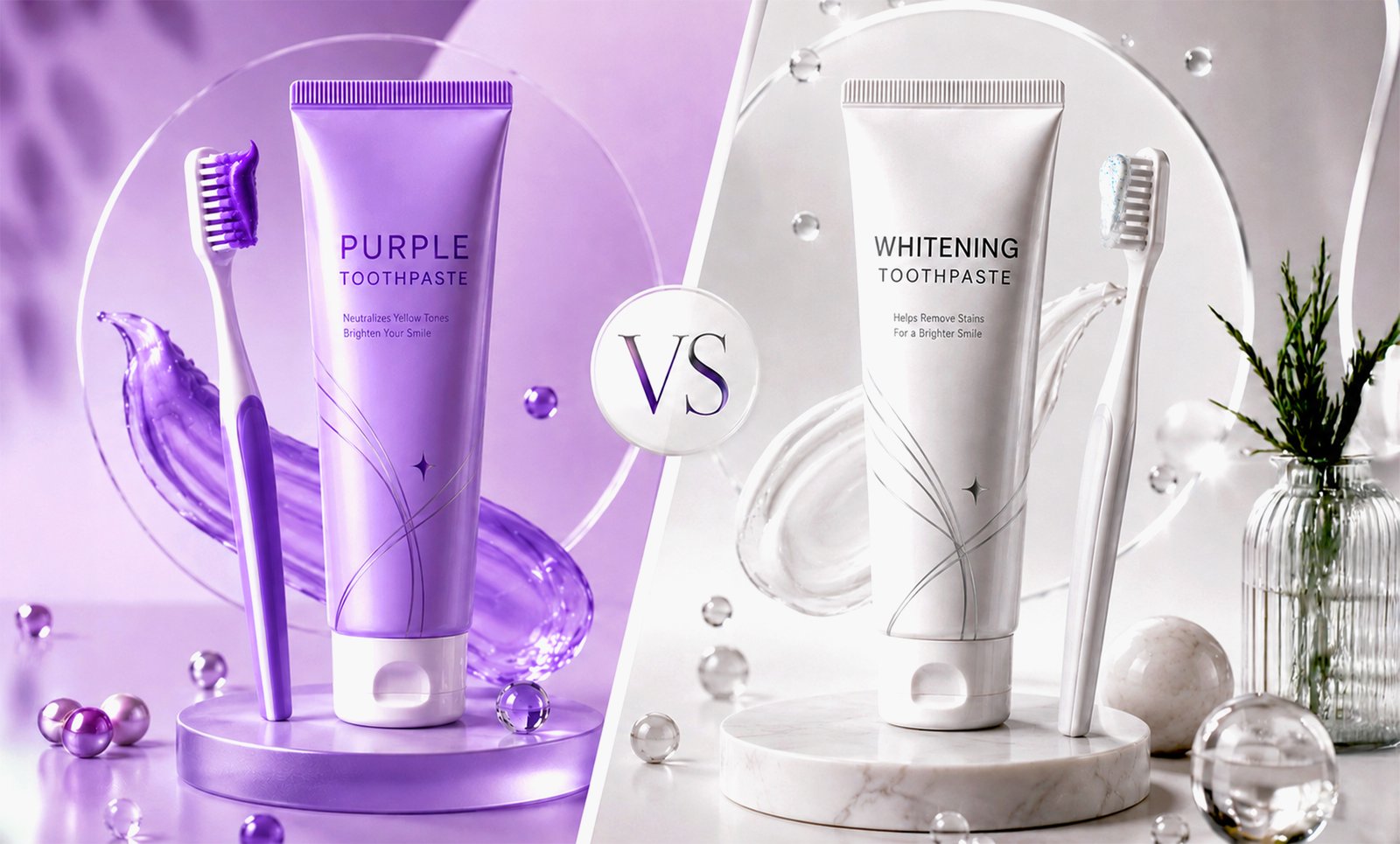
Now, what about purple toothpaste? Purple toothpaste is the new technological development in cosmetic oral care. Instead of using abrasive and chemical bleaching, purple toothpaste incorporates instant whitening through violet pigmentations which neutralizes yellow tones in teeth. This technology uses color theory instead of harsh chemicals that could potentially damage the teeth in the long run.
When choosing between Purple toothpaste vs Whitening Toothpaste, there are certain points we need to take into account. First we should consider the timeframe of results. Purple toothpaste has an instant but temporary effect, while whitening toothpaste has a gradual but long-term effect on the teeth. Second, we need to consider the sensitivity risk. Purple toothpaste has a very low sensitivity risk, while whitening toothpaste has a moderate to high sensitivity risk.
The teeth whitening industry is a very intriguing industry to dive into as it is projected to surpass $11 billion globally by the year 2032. Currently, whitening toothpaste products still remain the most accessible category worldwide, however the emergence of purple toothpaste and its popularity amongst Gen Z and millennials, have demonstrated its rapid expansion in the oral industry and how new consumer preferences can reshape the industry.
At the end of the day, whichever direction or type of market segmentation you choose, the market shows that there is still significant room for innovation and growth. From everyday whitening solutions to color-correcting formulas and more targeted whitening treatments, brands have an opportunity to differentiate themselves by responding to evolving consumer needs and preferences.
As consumers become increasingly conscious of their oral aesthetics and more willing to explore new formats, the future of teeth whitening lies not only in effectiveness, but also in accessibility, innovation, and creating products that fit seamlessly into consumers’ everyday routines.